Continue · Institutions of One × Fashion
Continue study · Founder intent → governed future
The Institutional Will
An institutional will is a coordinated set of decisions about authority, access, assets, archives, obligations, interpretation, privacy, and care—not a substitute for legal estate or corporate instruments.
Read the story00
The proposition
A founder may have strong wishes about who uses the name, completes work, leads the company, accesses files, speaks publicly, authenticates objects, licenses images, teaches methods, cares for dependents, protects private correspondence, or corrects history. Wishes written in one creative manifesto may not transfer assets, appoint corporate officers, satisfy testamentary formalities, bind contract parties, or resolve tax and jurisdiction questions. Those outcomes require coordinated professional instruments and facts.
The institutional will is the editorial and operational map that helps those instruments align. It makes values and desired decisions legible; inventories governing records; identifies stewards and alternates; separates public, restricted, confidential, culturally governed, and destroy-by-instruction material; plans funding and access; and stages review while the founder can still revise. It also recognizes other people’s rights: no founder can bequeath what they do not own or unilaterally decide another person’s story.
01–04
The institutional sequence
01 · INTENT
What should happen—and why?
Write desired outcomes for company, name, work in progress, archive, public voice, teaching, licensing, philanthropy, privacy, dependents, and closure in plain language.
Sources behind this section
An original working method informed by the linked records.
02 · AUTHORITY
Which instrument can make it happen?
Map corporate documents, contracts, employment terms, IP records, wills or trusts, powers, beneficiary designations, data policies, archive agreements, and jurisdiction-specific requirements with counsel.
Sources behind this section
An interpretation drawn from the linked records.
Open source S49 · Open source S52 · Open source S63 · Open source S64
03 · STEWARD
Who acts, who substitutes, who reviews?
Name primary and alternate decision-makers by function; address conflicts, expertise, compensation, access, accountability, dissent, cultural authority, and removal.
Sources behind this section
An original working method informed by the linked records.
04 · REHEARSE
Does the plan work in practice?
Run incapacity, death, departure, sale, closure, dispute, data loss, platform failure, preservation emergency, and public controversy; record fixes and review dates.
Sources behind this section
An original working method informed by the linked records.
Look closely
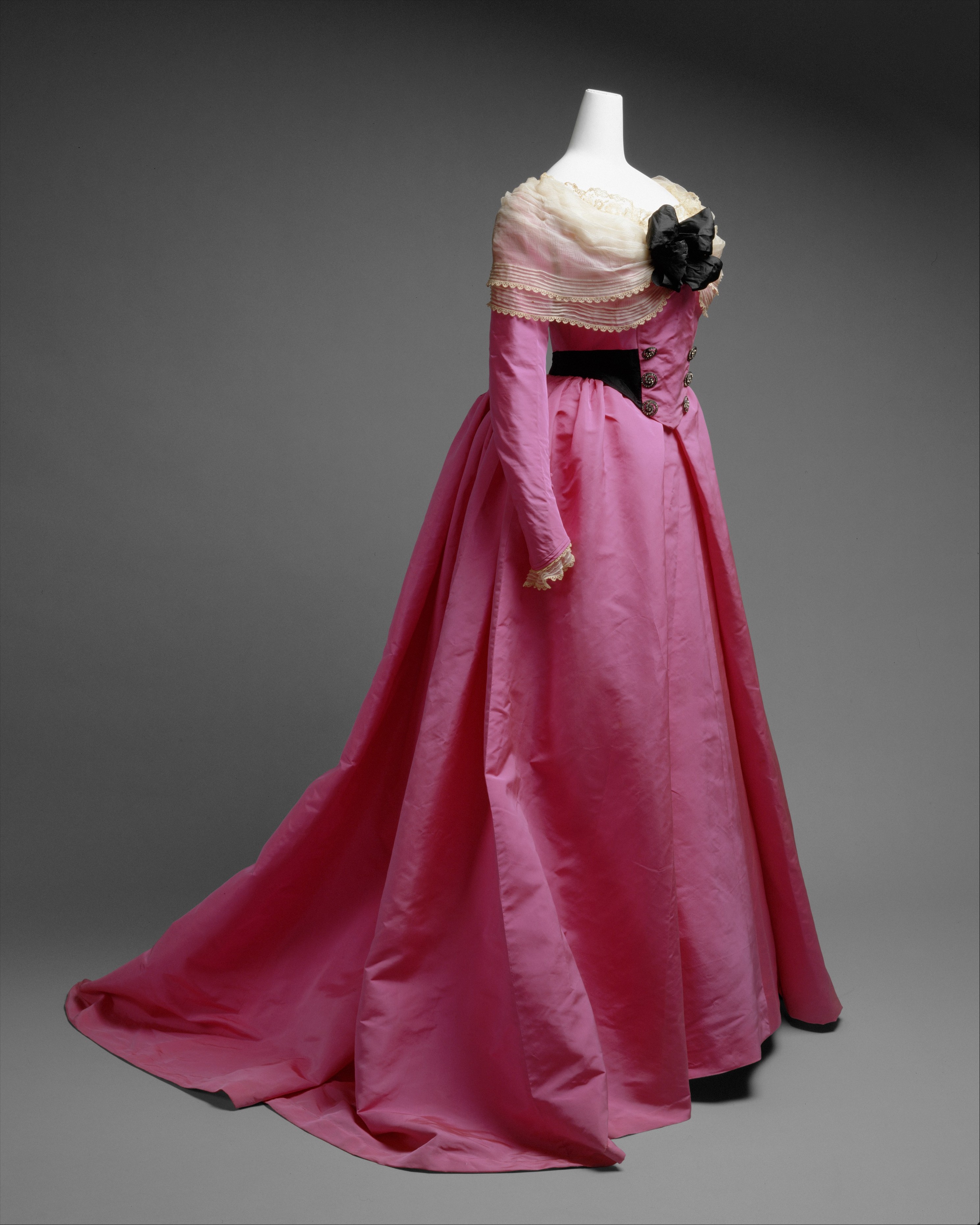
Fancy dress costume
House of Worth · ca. 1893 · Silk
The Worth costume survives through museum stewardship beyond its originating lives; it makes visible why future custody and interpretation deserve deliberate planning.
Object record and image details
- Collection number
- 1994.462a, b
- Credit
- Gift of James A. and Mary Elizabeth Kingsland, 1994
- Image terms
- Public Domain / Met Open Access
View the museum record ↗ · Download exhibition image ↓ · View the museum file ↗

COUNTERPOINT
What this framework could get wrong
Founder intent can support clarity or attempt to control culture indefinitely. Successors, workers, collaborators, families, communities, law, and changing conditions retain claims and agency. A responsible plan governs interpretation rather than freezing it.
FIELDWORK
Do the work now
Use this as a working session, not a score.
- Write a one-page plain-language intent letter.
- Attach every asset and authority to its governing record or mark unresolved.
- Name stewards, alternates, conflicts, funding, and review.
- Take the map to estate, corporate, IP, employment, privacy, tax, and cultural advisers as relevant.
What the sources establish
U.S. copyright interests may transfer by will or intestacy, but coordinated succession can require multiple instruments.
A founder intent document is not represented as a legally operative estate, corporate, IP, or tax instrument.
Source note
An original working method informed by the linked records.
READ / WATCH / LOOK CLOSER
Continue the story
17 U.S.C. § 201 — Ownership of copyright
U.S. Copyright Office · current
Open source ↗Source and use notes
Reference S63
Official statutory text; quote narrowly and link. Subsections (d) and (e) address transfer by law, will, or intestacy.
QUOTE_LINK
Standard Application Help: Claimant — transfer by inheritance
U.S. Copyright Office · current
Open source ↗Source and use notes
Reference S64
Official registration guidance; paraphrase and link. It does not resolve state probate or contract questions.
LINK_ONLY
15 U.S.C. § 1060 — Assignment
U.S. House Office of the Law Revision Counsel · current preliminary edition
Open source ↗Source and use notes
Reference S49
U.S. statutory text; quote narrowly and link to the official current source.
QUOTE_LINK
Delaware General Corporation Law § 141 — Board of directors
State of Delaware · current
Open source ↗Source and use notes
Reference S52
Official state statutory text; quote narrowly and link.
QUOTE_LINK
Personal Digital Archiving
Library of Congress · current; resources include 2013 publication
Open source ↗Source and use notes
Reference S08
Link and quote narrowly; check each downloadable resource before redistribution.
LINK_ONLY
Universal Electronic Records Management Requirements, Version 3
U.S. National Archives and Records Administration · 2023-06
Open source ↗Source and use notes
Reference S39
Government resource; link/download for education and do not imply endorsement.
LINK_ONLY
Collections Care
Smithsonian Institution Archives · current
Open source ↗Source and use notes
Reference S40
Link and paraphrase; page photography requires separate clearance.
LINK_ONLY
Appraisal Policy of the National Archives
U.S. National Archives and Records Administration · current policy; page updated 2026
Open source ↗Source and use notes
Reference S65
Official federal archival guidance; use as an authoritative method analogy, not as a rule governing private fashion archives.
LINK_ONLY
Electronic Records Information for Archivists
U.S. National Archives and Records Administration · current
Open source ↗Source and use notes
Reference S66
Official preservation guidance; paraphrase and link. Federal requirements are not represented as binding on private archives.
LINK_ONLY
THE OBJECTS
Look at the material record
Each object extends the question through a different silhouette, material, function, or moment.
FROM THE COLLECTIONFancy dress costume
House of Worth · ca. 1893 · Silk
An accession-quality record preserves a house object beyond the founder’s lifetime while keeping the object, maker attribution, and museum stewardship distinct.
Object record and image details
- Collection number
- 1994.462a, b
- Credit
- Gift of James A. and Mary Elizabeth Kingsland, 1994
- Image terms
- Public Domain / Met Open Access
- Origin
- Official institution collection record; independently catalogued, not AI-generated.
- Source
- View the museum record ↗
Download exhibition image ↓ · View the museum file ↗ · Download full image notes ↗
FURTHER READING
Archives, records, tools and learning
Personal Digital Archiving
Library of Congress · current; resources include 2013 publication
Open resource ↗Source and use notes
Reference S08
Link and quote narrowly; check each downloadable resource before redistribution.
LINK_ONLY
Universal Electronic Records Management Requirements, Version 3
U.S. National Archives and Records Administration · 2023-06
Open resource ↗Source and use notes
Reference S39
Government resource; link/download for education and do not imply endorsement.
LINK_ONLY
Collections Care
Smithsonian Institution Archives · current
Open resource ↗Source and use notes
Reference S40
Link and paraphrase; page photography requires separate clearance.
LINK_ONLY
15 U.S.C. § 1060 — Assignment
U.S. House Office of the Law Revision Counsel · current preliminary edition
Open resource ↗Source and use notes
Reference S49
U.S. statutory text; quote narrowly and link to the official current source.
QUOTE_LINK
Delaware General Corporation Law § 141 — Board of directors
State of Delaware · current
Open resource ↗Source and use notes
Reference S52
Official state statutory text; quote narrowly and link.
QUOTE_LINK
17 U.S.C. § 201 — Ownership of copyright
U.S. Copyright Office · current
Open resource ↗Source and use notes
Reference S63
Official statutory text; quote narrowly and link. Subsections (d) and (e) address transfer by law, will, or intestacy.
QUOTE_LINK
Standard Application Help: Claimant — transfer by inheritance
U.S. Copyright Office · current
Open resource ↗Source and use notes
Reference S64
Official registration guidance; paraphrase and link. It does not resolve state probate or contract questions.
LINK_ONLY
Appraisal Policy of the National Archives
U.S. National Archives and Records Administration · current policy; page updated 2026
Open resource ↗Source and use notes
Reference S65
Official federal archival guidance; use as an authoritative method analogy, not as a rule governing private fashion archives.
LINK_ONLY
Electronic Records Information for Archivists
U.S. National Archives and Records Administration · current
Open resource ↗Source and use notes
Reference S66
Official preservation guidance; paraphrase and link. Federal requirements are not represented as binding on private archives.
LINK_ONLY
Trademark Search system
USPTO · current; accessed 2026-09-07
Open resource ↗Source and use notes
Reference X28
Public search interface; exact live record and counsel review required.
LINK_ONLY
Trademark Assignment Search
USPTO · current; accessed 2026-09-07
Open resource ↗Source and use notes
Reference X29
Public search interface; recorded assignment is not a complete ownership opinion.
LINK_ONLY
Personal Digital Archiving
Library of Congress · current; accessed 2026-09-07
Open resource ↗Source and use notes
Reference X36
Official educational resource; link and quote narrowly.
LINK_ONLY
WIPO Global Brand Database
WIPO · current; accessed 2026-09-07
Open resource ↗Source and use notes
Reference X39
Public search tool; exact territorial record and counsel review required.
LINK_ONLY
JLM Couture, Inc. v. Gutman
Justia mirror of federal opinion · 2022
Open resource ↗Source and use notes
Reference X54
Public judicial opinion; linked to accessible mirror and requires counsel review before application.
QUOTE_LINK
JA Apparel Corp. v. Abboud
Justia mirror of federal opinion · 2010
Open resource ↗Source and use notes
Reference X55
Public judicial opinion; accessible mirror is link-only and interpretation remains counsel-gated.
QUOTE_LINK
Research notes for this chapter
Exhaustive within the 18-surface registry and recorded queries; not a claim to every item on the internet.
- Places searched
- 18
- Records considered
- 16
- Images available for use
- 1
- Further-reading links
- 15
Stopped after all 18 named surfaces were queried on 2026-09-07; qualifying records were retained, exact duplicate URLs and assets were removed, every reusable file was checked at work and file level, and remaining no-result surfaces were named. New records or changed rights statements reopen the report.
Download detailed research notes ↓ · Read how the collection was assembled
FOLLOW THE QUESTION
One inquiry, six forms
- Canonical essay: The Institutional Will
- Designing authority after absence long-form film
- Ten-frame institutional-will map carousel
- Four founder-intent vertical scripts
- Institutional Will Coordination Map
- Beehiiv, LinkedIn, Instagram, Pinterest, audio, and classroom editions
By RN Collins.
Download the chapter ↓ · Download source notes ↓
Practical and professional boundaries
Recorded performance, bespoke RN photography, participant releases, and counsel or specialist review are separate human-led work. They are not represented here as completed recordings, permissions, or professional opinions.
FIND IT ELSEWHERE
Where this dossier lives
How to read the source notes
Material statements link to the records behind them. Interpretation is not presented as source fact. Legal sections identify their jurisdiction; state, foreign, contractual, beneficial-ownership, validity, priority, and disputed-fact questions require appropriate professional review. This exhibition is educational and does not provide legal, conservation, or business advice.