Build · Institutions of One × Fashion
Build study · Repetition → recognition → evolution
How Does a Designer Develop Recognizable Codes?
A designer develops recognizable codes by making recurring decisions legible across difference—not by repeating a logo, freezing one silhouette, or declaring an abstract aesthetic owned.
Read the story00
The proposition
Recognition is an accumulated reader response, not a certificate a designer awards themself. Across seasons, people may learn to notice proportion, cut, color, material, closure, surface, casting, movement, image grammar, humor, restraint, or refusal. But recurrence alone can become imitation of one’s own archive. A durable code therefore needs both a pattern and a disciplined way to break it.
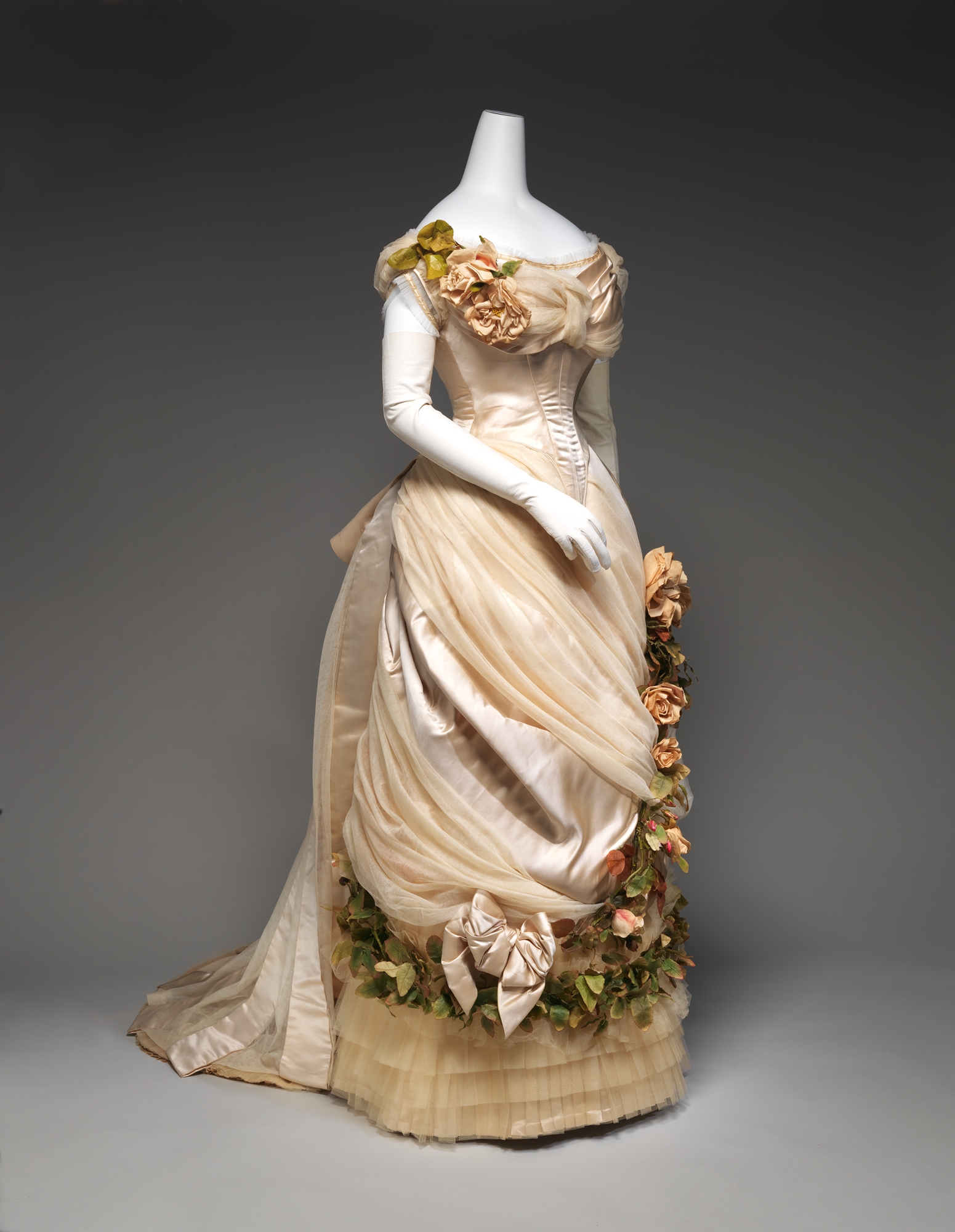
The surviving House of Worth object record demonstrates one form of continuity: maker attribution travels with date, material, accession, credit, and a public institutional record. It does not prove which feature the public recognized, who originated every detail, or which legal right covered it. U.S. Copyright Office and USPTO guidance further warn against collapsing a recognizable look into automatic copyright or trade-dress protection.
01–04
The institutional sequence
01 · NOTICE
What actually recurs?
Sample complete bodies of work, not isolated hero images. Code observable decisions—proportion, line, volume, material, construction, color, finish, movement, casting, image, language, refusal—and keep fact separate from critical interpretation.
Sources behind this section
An original working method informed by the linked records.
02 · NAME
Can the decision be described without mystique?
Write each code as a decision with range and rationale: what changes, what stays, what problem it solves, who contributes, and which exception proves that the principle is alive rather than decorative repetition.
Sources behind this section
An interpretation drawn from the linked records.
03 · TEST
Can another person recognize and challenge it?
Use blind comparisons, counterexamples, fittings, material trials, and collaborator critique. Record disagreement. If recognition depends entirely on founder explanation, the code has not yet become shared institutional knowledge.
Sources behind this section
An original working method informed by the linked records.
04 · BOUND
What is cultural signal, and what is a legal asset?
Separate reputation and visual resemblance from exact copyrighted expression, registered marks, design rights, contracts, confidential information, and other evidence. A codebook supports practice; it does not create a monopoly over style.
Sources behind this section
Directly supported by the linked records.
Look closely
Evening dress
House of Worth · ca. 1882 · Silk
This House of Worth evening dress preserves house-level attribution and a dense material record. It is evidence that codes can remain researchable; it is not evidence that every recurring feature was exclusively owned.
Object record and image details
- Collection number
- 2009.300.635a, b
- Credit
- Brooklyn Museum Costume Collection at The Metropolitan Museum of Art, Gift of the Brooklyn Museum, 2009; Gift of the Princess Viggo in accordance with the wishes of the Misses Hewitt, 1931
- Image terms
- Public Domain / Met Open Access
View the museum record ↗ · Download exhibition image ↓ · View the museum file ↗

COUNTERPOINT
What this framework could get wrong
Codification can turn a living practice into a checklist, reward self-copying, erase collaborators, and encourage overbroad ownership claims. The countermeasure is to document exceptions, disputed authorship, outside influence, community knowledge, failed experiments, and the conditions under which a code should change.
FIELDWORK
Do the work now
Use this as a working session, not a score.
- Select twenty works across at least three moments and code only what can be observed.
- Write five proposed codes, then attach two counterexamples and one deliberate exception to each.
- Ask two collaborators to revise the descriptions and identify missing labor or influence.
- Separate every cultural-recognition claim from the exact record supporting any legal right.
What the sources establish
The Met catalogues House of Worth as the maker of surviving garments, preserving attribution alongside date, material, accession, credit, and object history.
A recurring silhouette, palette, or styling tendency is not automatically protected as copyright or registered trade dress in the United States.
A useful codebook records recurring decisions, exceptions, and evidence; it does not claim ownership of an abstract style.
Source note
An original working method informed by the linked records.
READ / WATCH / LOOK CLOSER
Continue the story
Evening dress
The Metropolitan Museum of Art · ca. 1882
Open source ↗Source and use notes
Reference S68
Object record marks image Public Domain under Met Open Access; retain title, maker, date, accession, credit, and canonical link.
REUSE
The Costume Institute collection
The Metropolitan Museum of Art · collection current; accessed 2026-09-05
Open source ↗Source and use notes
Reference S98
Official collection context may be paraphrased and linked; object imagery remains governed item by item.
LINK_ONLY
Useful Articles
U.S. Copyright Office · current; accessed 2026-09-05
Open source ↗Source and use notes
Reference S92
Official registration guidance; paraphrase and link. It does not establish protection for an abstract aesthetic or garment as a whole.
LINK_ONLY
Trademark Manual of Examining Procedure §1202.02 — Registration of Trade Dress
U.S. Patent and Trademark Office · current edition; accessed 2026-09-05
Open source ↗Source and use notes
Reference S93
Official examination guidance; paraphrase and link. Product-design trade dress requires fact-specific legal analysis.
LINK_ONLY
The Metropolitan Museum of Art Collection API
The Metropolitan Museum of Art · documentation current; accessed 2026-09-05
Open source ↗Source and use notes
Reference S96
Official API documentation; use to verify object metadata and public-domain flags while retaining each controlling object record.
LINK_ONLY
Interview of Christine Pupillo, Leonard Trattner, and Harry Greenberg of the Patternmaking Department
Fashion Institute of Technology Special Collections and College Archives · 1995-02-27; digitized 2020
Open source ↗Source and use notes
Reference S72
In Copyright; FIT prohibits copying, display, or upload without permission except reviewed fair use. Link to the item and do not embed its media.
LINK_ONLY
Patternmaking certificate
Fashion Institute of Technology · current
Open source ↗Source and use notes
Reference S73
Official curriculum description; paraphrase and link. Page media is not treated as open licensed.
LINK_ONLY
Protection for Fashion Design — Statement of the Register of Copyrights
U.S. Copyright Office · 2006-07-27
Open source ↗Source and use notes
Reference S91
Official testimony; quote narrowly and distinguish the historical statement from current law and case-specific advice.
QUOTE_LINK
THE OBJECTS
Look at the material record
Each object extends the question through a different silhouette, material, function, or moment.
FROM THE COLLECTIONEvening dress
House of Worth · ca. 1882 · Silk
The record separates the material dress, House of Worth attribution, Charles Frederick Worth design credit, accession, and the museum’s present custody.
Object record and image details
- Collection number
- 2009.300.635a, b
- Credit
- Brooklyn Museum Costume Collection at The Metropolitan Museum of Art, Gift of the Brooklyn Museum, 2009; Gift of the Princess Viggo in accordance with the wishes of the Misses Hewitt, 1931
- Image terms
- Public Domain / Met Open Access
- Origin
- Official institution collection record; independently catalogued, not AI-generated.
- Source
- View the museum record ↗
Download exhibition image ↓ · View the museum file ↗ · Download full image notes ↗
 FROM THE COLLECTION
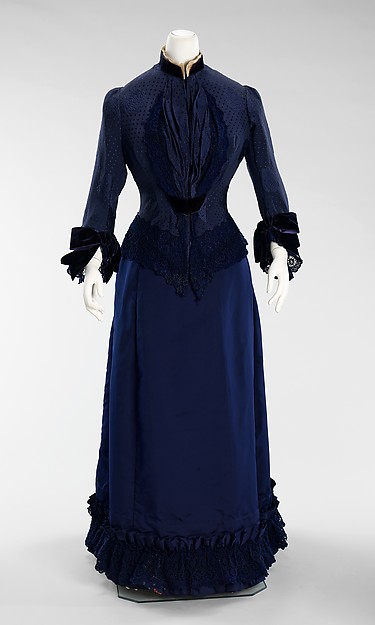
Dress
Maison Pingat · ca. 1885 · Silk, cotton
Maison Pingat survives here through an exact maker record, construction evidence, custody, and an open image—not through fame alone.
Object record and image details
- Collection number
- 2009.300.628a, b
- Credit
- Brooklyn Museum Costume Collection at The Metropolitan Museum of Art; Gift of Lillian E. Glenn Peirce and Mabel Glenn Cooper, 1929
- Image terms
- Public Domain / Met Open Access
- Origin
- Official institution collection record; independently catalogued, not AI-generated.
- Source
- View the museum record ↗
Download exhibition image ↓ · View the museum file ↗ · Download full image notes ↗
FURTHER READING
Archives, records, tools and learning
Evening dress
The Metropolitan Museum of Art · ca. 1882
Open resource ↗Source and use notes
Reference S68
Object record marks image Public Domain under Met Open Access; retain title, maker, date, accession, credit, and canonical link.
REUSE
Interview of Christine Pupillo, Leonard Trattner, and Harry Greenberg of the Patternmaking Department
Fashion Institute of Technology Special Collections and College Archives · 1995-02-27; digitized 2020
Open resource ↗Source and use notes
Reference S72
In Copyright; FIT prohibits copying, display, or upload without permission except reviewed fair use. Link to the item and do not embed its media.
LINK_ONLY
Patternmaking certificate
Fashion Institute of Technology · current
Open resource ↗Source and use notes
Reference S73
Official curriculum description; paraphrase and link. Page media is not treated as open licensed.
LINK_ONLY
Protection for Fashion Design — Statement of the Register of Copyrights
U.S. Copyright Office · 2006-07-27
Open resource ↗Source and use notes
Reference S91
Official testimony; quote narrowly and distinguish the historical statement from current law and case-specific advice.
QUOTE_LINK
Useful Articles
U.S. Copyright Office · current; accessed 2026-09-05
Open resource ↗Source and use notes
Reference S92
Official registration guidance; paraphrase and link. It does not establish protection for an abstract aesthetic or garment as a whole.
LINK_ONLY
Trademark Manual of Examining Procedure §1202.02 — Registration of Trade Dress
U.S. Patent and Trademark Office · current edition; accessed 2026-09-05
Open resource ↗Source and use notes
Reference S93
Official examination guidance; paraphrase and link. Product-design trade dress requires fact-specific legal analysis.
LINK_ONLY
The Metropolitan Museum of Art Collection API
The Metropolitan Museum of Art · documentation current; accessed 2026-09-05
Open resource ↗Source and use notes
Reference S96
Official API documentation; use to verify object metadata and public-domain flags while retaining each controlling object record.
LINK_ONLY
The Costume Institute collection
The Metropolitan Museum of Art · collection current; accessed 2026-09-05
Open resource ↗Source and use notes
Reference S98
Official collection context may be paraphrased and linked; object imagery remains governed item by item.
LINK_ONLY
Dress designed by Ann Lowe
National Museum of African American History and Culture · 1950s; record accessed 2026-09-07
Open resource ↗Source and use notes
Reference X03
Candidate record; exact media carries its own usage designation and is not copied here.
LINK_ONLY
The World of Anna Sui
Museum of Arts and Design · 2019
Open resource ↗Source and use notes
Reference X07
Official exhibition record; page imagery is not treated as open licensed.
LINK_ONLY
Fashion collection
Victoria and Albert Museum · collection current; accessed 2026-09-07
Open resource ↗Source and use notes
Reference X11
Link and cite; exact object/media rights govern reproduction.
LINK_ONLY
Dress
The Metropolitan Museum of Art · ca. 1885; accessed 2026-09-07
Open resource ↗Source and use notes
Reference X14
Public Domain under Met Open Access; exact image installed separately.
PUBLIC_DOMAIN_CC0
Wedding dress by Christian Dior
National Museum of American History · twentieth century; accessed 2026-09-07
Open resource ↗Source and use notes
Reference X20
Smithsonian record marks the digital asset CC0; canonical record retained pending direct-file ingest.
LINK_ONLY
Secrets of Balenciaga’s construction
Victoria and Albert Museum · 2023; accessed 2026-09-07
Open resource ↗Source and use notes
Reference X48
Protected museum text and media; use the first-party page/player only.
AUTHORIZED_EMBED
Learning from “The Master”
Victoria and Albert Museum · 2023; accessed 2026-09-07
Open resource ↗Source and use notes
Reference X49
Protected first-party media; link or authorized player only.
AUTHORIZED_EMBED
Christian Louboutin v. Yves Saint Laurent
Justia mirror of federal opinion · 2013
Open resource ↗Source and use notes
Reference X56
Public judicial opinion; quote narrowly and preserve procedural posture.
QUOTE_LINK
Contemporary fashion designers on Balenciaga
Victoria and Albert Museum · 2023; accessed 2026-09-07
Open resource ↗Source and use notes
Reference X59
Protected first-party article and media; link and paraphrase only.
LINK_ONLY
Research notes for this chapter
Exhaustive within the 18-surface registry and recorded queries; not a claim to every item on the internet.
- Places searched
- 18
- Records considered
- 19
- Images available for use
- 4
- Further-reading links
- 15
Stopped after all 18 named surfaces were queried on 2026-09-07; qualifying records were retained, exact duplicate URLs and assets were removed, every reusable file was checked at work and file level, and remaining no-result surfaces were named. New records or changed rights statements reopen the report.
Download detailed research notes ↓ · Read how the collection was assembled
FOLLOW THE QUESTION
One inquiry, six forms
- Canonical essay: Recognition Without Repetition
- Twelve-minute twenty-look visual analysis
- Ten-frame code-versus-logo carousel
- Five code-reading vertical scripts
- House Code Counterexample Atlas
- Newsletter, studio critique, and teaching editions
By RN Collins.
Download the chapter ↓ · Download source notes ↓
Practical and professional boundaries
Recorded performance, bespoke RN photography, participant releases, and counsel or specialist review are separate human-led work. They are not represented here as completed recordings, permissions, or professional opinions.
FIND IT ELSEWHERE
Where this dossier lives
How to read the source notes
Material statements link to the records behind them. Interpretation is not presented as source fact. Legal sections identify their jurisdiction; state, foreign, contractual, beneficial-ownership, validity, priority, and disputed-fact questions require appropriate professional review. This exhibition is educational and does not provide legal, conservation, or business advice.