Control · Institutions of One × Fashion
Authorship study · Influence → evidence
Can Taste Be Owned in the Age of Generative AI?
Taste can be recognized, taught, imitated, and commercially valuable without becoming a single ownable legal object; generative AI makes the need to separate those categories urgent.
Read the story00
The proposition
“Taste” bundles together judgment, selection, arrangement, references, recurring codes, reputation, and the ability to decide what does not belong. Some outputs, names, designs, agreements, and confidential materials may engage specific legal regimes. An aesthetic resemblance or prompt that invokes a style does not by itself answer which right—if any—has been implicated.
WIPO’s fashion resources distinguish trademarks, designs, copyright, and patents as different tools with different subject matter. That is the beginning of the analysis, not a verdict on a particular model, dataset, output, jurisdiction, or dispute. This exhibition offers an evidence architecture: document sources, human decisions, permissions, transformations, claims, and uncertainty before reaching for the word ownership.
01–04
The institutional sequence
01 · TASTE
What exactly is being claimed?
Separate a general sensibility from a named mark, protected work, registered design, confidential process, contractual promise, or misleading commercial representation. Precision prevents cultural grievance from being mistaken for a settled legal result.
Sources behind this section
Directly supported by the linked records.
02 · TRACE
What entered the process?
Keep a source log for references, licensed assets, model and tool versions, prompts, human selections, rejected outputs, edits, and final approvals. The record supports accountability without proving a legal conclusion on its own.
Sources behind this section
An original working method informed by the linked records.
03 · TRANSFORM
Where is human judgment visible?
Describe the problem, constraints, alternatives, selection criteria, arrangement, revision, and final expressive choices. Avoid claiming that effort alone creates protection; the purpose is to preserve an accurate creative record.
Sources behind this section
An original working method informed by the linked records.
04 · REVIEW
Which question needs counsel or permission?
Flag identifiable source works, living artists or houses named in prompts, confidential inputs, deceptive attribution, commercial marks, uncertain licenses, and jurisdiction-specific design questions for qualified review.
Sources behind this section
An original working method informed by the linked records.
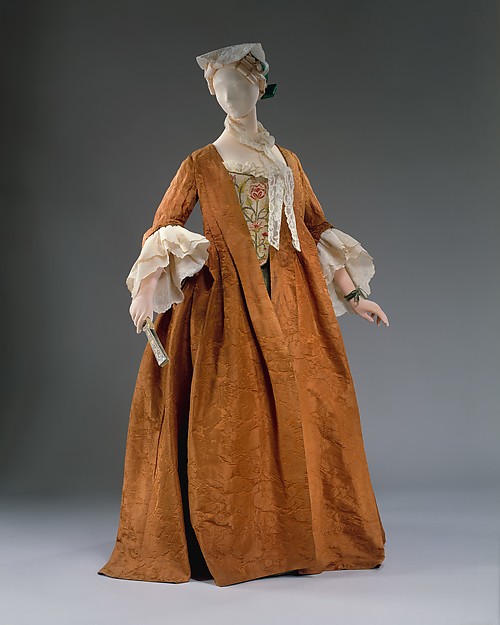
Look closely
Dress
French · 1735–40 · Silk, flax
The maker of this richly documented dress remains identified only as French. The object demonstrates how evidence can preserve material facts while authorship and institutional identity remain unresolved.
Object record and image details
- Collection number
- 1983.399.1
- Credit
- Gift of Mary Tavener Holmes, 1983
- Image terms
- Public Domain / Met Open Access
View the museum record ↗ · Download exhibition image ↓ · View the museum file ↗

COUNTERPOINT
What this framework could get wrong
Documentation can become performative transparency, and legal categories cannot resolve every ethical question about extraction, cultural authority, labor, or consent. A responsible process needs both legal review and editorial judgment.
FIELDWORK
Do the work now
Use this as a working session, not a score.
- Define the element you are calling taste.
- Separate facts, influences, protected assets, and interpretations.
- Record inputs, permissions, human decisions, and transformations.
- Send unresolved rights or attribution questions to qualified counsel.
What the sources establish
Copyright, trademark, design protection, and contract answer different questions about creative work.
Source note
Directly supported by the linked records.
Open source S28 · Open source S29 · Open source S30 · Open source S31
Aesthetic resemblance alone does not determine a legal claim.
READ / WATCH / LOOK CLOSER
Continue the story
Intellectual Property in Fashion
World Intellectual Property Organization · current; updated 2026-08-21
Open source ↗Source and use notes
Reference S28
Link and paraphrase with attribution; do not reuse third-party stock illustrations.
LINK_ONLY
WIPO IP Diagnostics for the Fashion Industry
World Intellectual Property Organization · 2026-08-21
Open source ↗Source and use notes
Reference S29
Link to the tool/news; do not reproduce the assessment verbatim.
LINK_ONLY
How to Protect Designs?
World Intellectual Property Organization · current
Open source ↗Source and use notes
Reference S30
Link and paraphrase with attribution.
LINK_ONLY
Industrial Designs
World Intellectual Property Organization · current
Open source ↗Source and use notes
Reference S31
Link only; media rights remain separate.
LINK_ONLY
Personal Digital Archiving
Library of Congress · current; resources include 2013 publication
Open source ↗Source and use notes
Reference S08
Link and quote narrowly; check each downloadable resource before redistribution.
LINK_ONLY
Universal Electronic Records Management Requirements, Version 3
U.S. National Archives and Records Administration · 2023-06
Open source ↗Source and use notes
Reference S39
Government resource; link/download for education and do not imply endorsement.
LINK_ONLY
THE OBJECTS
Look at the material record
Each object extends the question through a different silhouette, material, function, or moment.
FROM THE COLLECTIONDress
French · 1735–40 · Silk, flax
A garment record becomes institutional evidence when material, date, maker, identifier, and rights remain attached.
Object record and image details
- Collection number
- 1983.399.1
- Credit
- Gift of Mary Tavener Holmes, 1983
- Image terms
- Public Domain / Met Open Access
- Origin
- Official institution collection record; independently catalogued, not AI-generated.
- Source
- View the museum record ↗
Download exhibition image ↓ · View the museum file ↗ · Download full image notes ↗
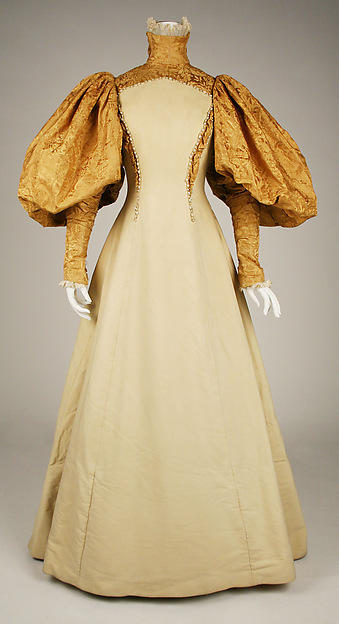 FROM THE COLLECTION
Bridesmaid dress
A. F. Jammes · 1896 · Textile garment
A documented copy after a Worth model makes the line between reference, attribution, and surviving object evidence visible.
Object record and image details
- Collection number
- C.I.41.14.2
- Credit
- Gift of Miss Agnes Miles Carpenter, 1941
- Image terms
- Public Domain / Met Open Access
- Origin
- Official institution collection record; independently catalogued, not AI-generated.
- Source
- View the museum record ↗
Download exhibition image ↓ · View the museum file ↗ · Download full image notes ↗
FURTHER READING
Archives, records, tools and learning
Personal Digital Archiving
Library of Congress · current; resources include 2013 publication
Open resource ↗Source and use notes
Reference S08
Link and quote narrowly; check each downloadable resource before redistribution.
LINK_ONLY
Intellectual Property in Fashion
World Intellectual Property Organization · current; updated 2026-08-21
Open resource ↗Source and use notes
Reference S28
Link and paraphrase with attribution; do not reuse third-party stock illustrations.
LINK_ONLY
WIPO IP Diagnostics for the Fashion Industry
World Intellectual Property Organization · 2026-08-21
Open resource ↗Source and use notes
Reference S29
Link to the tool/news; do not reproduce the assessment verbatim.
LINK_ONLY
How to Protect Designs?
World Intellectual Property Organization · current
Open resource ↗Source and use notes
Reference S30
Link and paraphrase with attribution.
LINK_ONLY
Industrial Designs
World Intellectual Property Organization · current
Open resource ↗Source and use notes
Reference S31
Link only; media rights remain separate.
LINK_ONLY
Universal Electronic Records Management Requirements, Version 3
U.S. National Archives and Records Administration · 2023-06
Open resource ↗Source and use notes
Reference S39
Government resource; link/download for education and do not imply endorsement.
LINK_ONLY
Bridesmaid dress
The Metropolitan Museum of Art · 1896; accessed 2026-09-07
Open resource ↗Source and use notes
Reference X13
Public Domain under Met Open Access; exact image installed separately.
PUBLIC_DOMAIN_CC0
Knock It Off: A History of Design Piracy in the U.S. Women’s Ready-to-Wear Apparel Industry
Smithsonian Libraries · 2016
Open resource ↗Source and use notes
Reference X21
Bibliographic discovery record; book remains link-only.
LINK_ONLY
Copyright and the Fashion Design Industry
U.S. Copyright Office · current; accessed 2026-09-07
Open resource ↗Source and use notes
Reference X32
Public government text; cite narrowly and retain date/context.
LINK_ONLY
Christian Louboutin v. Yves Saint Laurent
Justia mirror of federal opinion · 2013
Open resource ↗Source and use notes
Reference X56
Public judicial opinion; quote narrowly and preserve procedural posture.
QUOTE_LINK
Research notes for this chapter
Exhaustive within the 18-surface registry and recorded queries; not a claim to every item on the internet.
- Places searched
- 18
- Records considered
- 12
- Images available for use
- 3
- Further-reading links
- 9
Stopped after all 18 named surfaces were queried on 2026-09-07; qualifying records were retained, exact duplicate URLs and assets were removed, every reusable file was checked at work and file level, and remaining no-result surfaces were named. New records or changed rights statements reopen the report.
Download detailed research notes ↓ · Read how the collection was assembled
FOLLOW THE QUESTION
One inquiry, six forms
- Canonical essay: Can Taste Be Owned?
- Twelve-minute evidence-led video script
- Ten-frame rights-versus-resemblance carousel
- Five AI authorship shorts
- Taste Trace Ledger
- Newsletter, seminar, and counsel-prep editions
By RN Collins.
Download the chapter ↓ · Download source notes ↓
Practical and professional boundaries
Recorded performance, bespoke RN photography, participant releases, and counsel or specialist review are separate human-led work. They are not represented here as completed recordings, permissions, or professional opinions.
FIND IT ELSEWHERE
Where this dossier lives
How to read the source notes
Material statements link to the records behind them. Interpretation is not presented as source fact. Legal sections identify their jurisdiction; state, foreign, contractual, beneficial-ownership, validity, priority, and disputed-fact questions require appropriate professional review. This exhibition is educational and does not provide legal, conservation, or business advice.